
5 Signs Your Warehouse Has Outgrown Its Current System
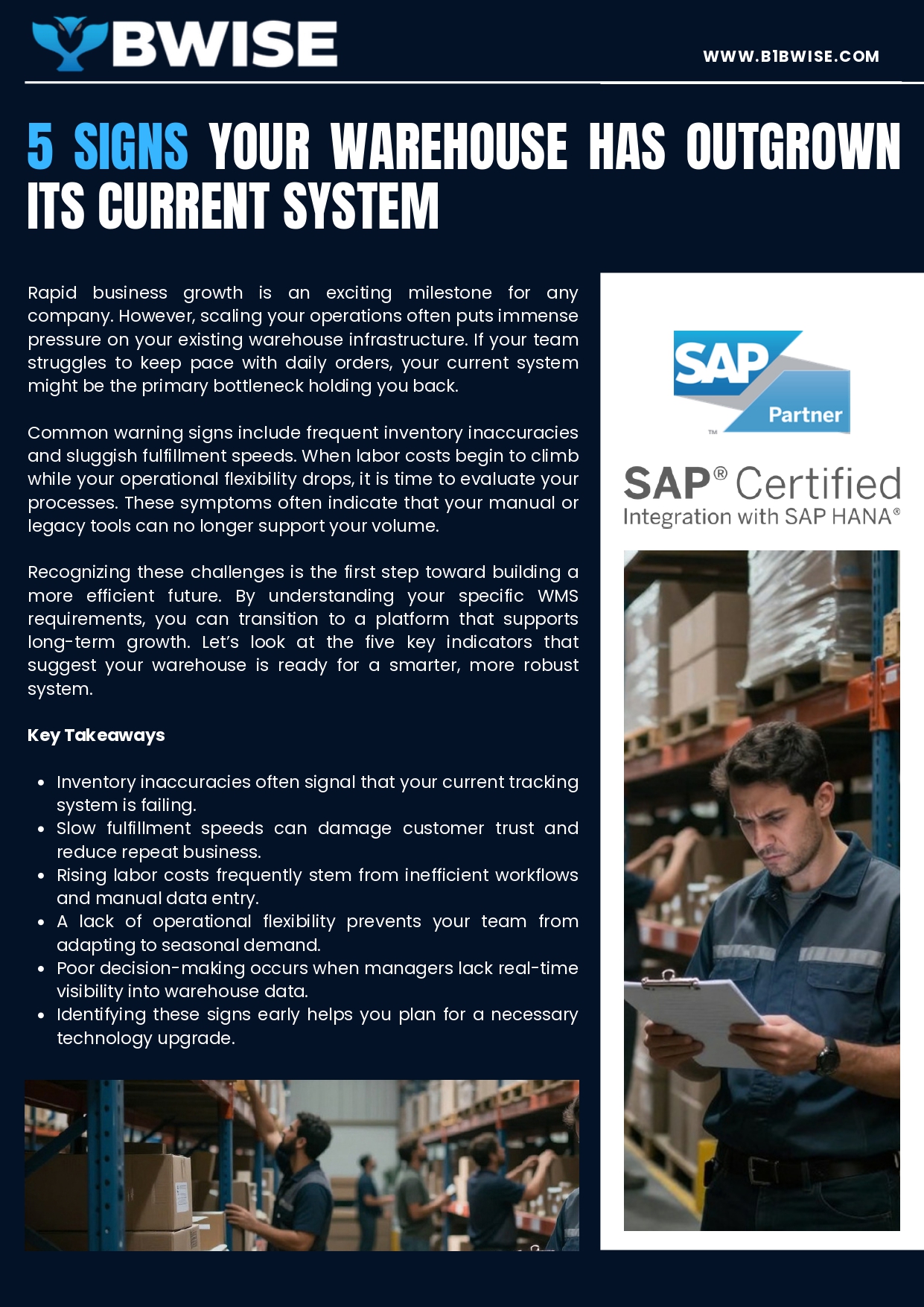
Every expanding enterprise hits a tipping point where the simple tools that powered its early days start buckling under pressure. When order volumes surge and you are trying to manage inventory across multiple channels, spreadsheets and basic tracking methods quickly transform from helpful shortcuts into massive operational bottlenecks. You might notice physical counts no longer match what is logged in your system, staff members spend hours wandering aisle to aisle holding paper pick lists, or labor costs rise while actual fulfillment speeds slow down. These friction points are rarely just temporary growing pains from a busy weekend. Instead, persistent errors, rising return rates, and constant manual data overrides indicate systemic flaws in your supply chain infrastructure. When team members spend more time playing detective to find misplaced stock or manually typing spreadsheet data across disconnected systems than actually packing and shipping products, your existing warehouse setup has hit its limit.
Upgrading Your Infrastructure for Speed, Accuracy, and Scale
Overcoming these operational limits requires moving away from manual guesswork and adopting modern technology built to streamline daily tasks. A robust Warehouse Management System (WMS) replaces outdated processes with automated, real-time tools like barcode scanning, handheld mobile workflows, and cycle counting. Instead of relying on rigid, one-size-fits-all routines, advanced platforms introduce smart strategies such as wave, batch, cluster, or zone picking to drastically cut down unnecessary floor travel and boost picking accuracy. These systems automatically optimize pick paths and direct putaway locations so every item is stored and retrieved using the most logical route possible. For complex businesses managing e-commerce, wholesale, and retail channels under one roof, a flexible platform easily adapts to specialized requirements like kitting, cross-docking, and lot or serial number tracking. Eliminating duplicate data entry frees your workforce from tedious admin tasks, transforming your fulfillment center into an agile, highly accurate engine that keeps pace with rising customer demands.
Empowering Leadership with Real-Time Data and Analytics
Beyond physical workflows, the true strength of a modern warehouse system lies in total operational visibility. Running a fast-paced fulfillment operation using delayed end-of-day or weekly spreadsheets forces managers to work reactively, addressing bottlenecks long after the damage is done. Upgrading your digital foundation solves this information gap by providing live dashboards, exception alerts, and actionable analytics. Leaders gain immediate insight into critical performance metrics including stock accuracy, employee productivity, and on-time shipping performance. Automated work assignments and task interleaving ensure your team stays balanced and productive throughout their shifts, while instant data syncs give management complete clarity across single or multi-location facilities. Armed with reliable, up-to-the-minute intelligence rather than outdated estimates, leadership can make proactive adjustments, eliminate costly delays, and turn the warehouse from a daily headache into a powerful engine for long-term growth.