
The automotive aftermarket industry is changing rapidly. Businesses that once relied on manual tracking now face immense pressure to modernize their operations. Staying competitive requires more than just hard work; it demands advanced digital management tools to keep pace with global supply chain demands.
Implementing a robust ERP system is the most effective way to gain a clear advantage. SAP Business One serves as a powerful engine for companies looking to streamline their daily tasks. By integrating complex data into one platform, distributors can finally achieve peak operational efficiency.
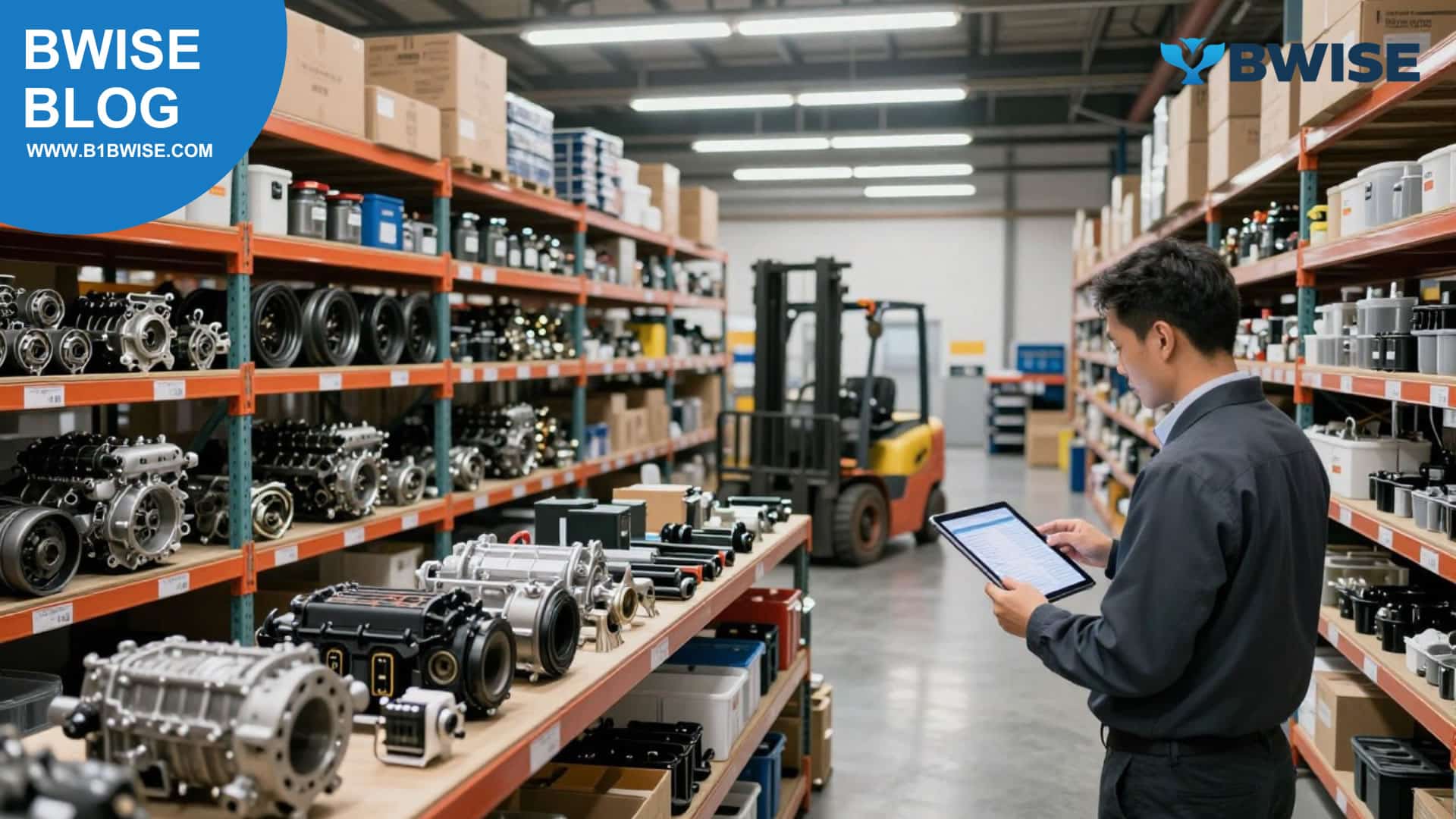
This software transforms how teams handle inventory and logistics. When you move away from outdated spreadsheets, you unlock real-time visibility across your entire organization. Embracing this technology ensures your business remains agile in a fast-paced market environment.
Key Takeaways
- Modern ERP systems are essential for success in the automotive aftermarket.
- Manual tracking methods are no longer sufficient for growing businesses.
- SAP Business One provides a centralized platform for better decision-making.
- Digital integration significantly boosts overall operational efficiency.
- Real-time data access helps distributors stay ahead of market trends.
Modern Challenges in Auto Parts Warehousing
Distributors today face a unique set of hurdles when organizing their inventory for maximum efficiency. The rapid evolution of vehicle technology means that the complexity of auto parts warehousing continues to grow. Staying ahead requires a deep understanding of the operational bottlenecks that often slow down distribution centers.
Managing High SKU Density and Compatibility
One of the most significant obstacles is the sheer volume of unique items that must be tracked. Because modern vehicles feature diverse makes and models, car parts storage requires highly precise organizational strategies to prevent errors. Without a clear system, staff members often struggle to locate specific components among thousands of similar-looking items.
Compatibility is another major concern for warehouse managers. Ensuring that the right part matches the specific vehicle year and trim level is vital for customer satisfaction. Advanced inventory management helps teams categorize these parts effectively, reducing the risk of shipping incorrect items to repair shops or retail customers.
The Impact of Just-in-Time Delivery Demands
The rise of just-in-time delivery has fundamentally changed how businesses approach their logistics. Customers now expect parts to arrive almost immediately, leaving little room for error in the supply chain. This pressure forces warehouses to maintain perfect inventory levels to avoid costly delays that could halt vehicle repairs.
Effective auto parts warehousing relies on the ability to predict demand accurately. When a facility masters its car parts storage layout, it can process orders faster and meet these tight deadlines with ease. By addressing these modern challenges head-on, distributors can build a more resilient and profitable operation.
Core Capabilities of SAP Business One for Automotive Distribution
Implementing the right technology is the first step toward mastering warehouse management for auto industry operations. By utilizing a centralized platform, businesses can bridge the gap between complex supply chain demands and daily warehouse tasks. These automotive warehouse solutions provide the clarity needed to make informed decisions in a fast-paced market.
Real-Time Inventory Visibility and Tracking
Maintaining an accurate count of thousands of parts is a significant challenge for any distributor. SAP Business One solves this by offering real-time inventory visibility, ensuring that managers always know exactly what is in stock. This level of precision prevents costly stockouts and reduces the risk of over-ordering slow-moving components.
With instant access to data, staff can track parts across multiple locations with ease. This transparency is vital for maintaining high service levels and meeting customer expectations. Accurate stock tracking allows teams to focus on fulfillment rather than searching for missing items.
Automated Procurement and Supplier Management
Efficient procurement is the backbone of a healthy supply chain. Automated features within the system help maintain optimal stock levels by streamlining communication with suppliers. When inventory hits a predefined threshold, the system can trigger purchase orders automatically.
This automation removes the guesswork from replenishment cycles and ensures that essential parts are always available. By fostering better relationships through automated supplier management, companies can negotiate better terms and improve lead times. These core capabilities are essential for any professional working in warehouse management for auto industry environments.

Optimizing Auto Parts Warehousing Operations
Efficiency on the warehouse floor is the backbone of a successful auto parts business. When operations run smoothly, your team can process orders faster and keep customers satisfied. Implementing robust auto parts warehousing strategies allows you to stay ahead in a fast-paced market.
Streamlining Picking and Packing Workflows
Manual processes often lead to bottlenecks that slow down your entire distribution chain. By adopting digital workflows, your staff can navigate the warehouse with clear, system-generated instructions. This shift significantly reduces the time spent searching for specific components.
Automated picking lists ensure that employees take the most efficient routes through the aisles. Optimized picking paths minimize travel time and physical fatigue for your warehouse team. Consequently, your packing stations can process a higher volume of shipments every single day.
Reducing Shrinkage and Improving Stock Accuracy
Maintaining precise inventory levels is a constant challenge for any warehouse management for auto industry professional. Discrepancies between digital records and physical stock often lead to lost revenue and missed sales opportunities. Automated tracking tools provide a real-time view of every item in your facility.
By integrating these systems, you can drastically reduce shrinkage caused by human error or misplaced parts. Accurate data ensures that your procurement team knows exactly when to reorder, preventing both overstocking and stockouts. These improvements are vital for maintaining healthy profit margins in the competitive landscape of auto parts warehousing.
Managing Complex Vehicle Components Inventory
Managing a vast array of vehicle components requires more than just shelf space; it demands absolute precision. When you maintain a high-quality vehicle components inventory, you ensure that every item is accounted for from the moment it arrives. This level of control is vital for optimizing your car parts storage and reducing costly errors.
Handling Serial Numbers and Batch Tracking
Automotive parts often include safety-critical items that require strict documentation. SAP Business One provides robust tools to manage these requirements through detailed serial number and batch tracking. By assigning unique identifiers to each component, you can trace the entire lifecycle of a part from the supplier to the final customer.
This granular visibility is essential for managing recalls or warranty claims efficiently. You can easily identify which batch a specific part belongs to, ensuring that safety standards are always met. Automated tracking removes the guesswork, allowing your team to focus on faster order fulfillment.
Cross-Referencing OEM and Aftermarket Parts
Customers frequently look for alternatives to original equipment manufacturer (OEM) parts to save on costs. Successfully managing these requests requires a system that can accurately cross-reference different part numbers. SAP Business One allows you to link aftermarket alternatives directly to OEM specifications within your vehicle components inventory.
This feature ensures that your staff always selects the correct item, regardless of the brand or part number provided by the customer. By streamlining this process, you improve your car parts storage efficiency and significantly reduce the rate of returns. Providing the right part the first time builds long-term trust with your clients and keeps your warehouse operations running at peak performance.

Enhancing Supply Chain Efficiency with Integrated ERP
Achieving peak performance in your warehouse requires a seamless connection between your inventory and sales platforms. By leveraging automotive warehouse solutions, businesses can bridge the gap between back-end operations and customer-facing storefronts. This integration ensures that your team always has a clear, accurate picture of available stock.
Synchronizing Warehouse Data with Sales Channels
When your ERP system communicates directly with your e-commerce site, you eliminate the risk of overselling items. This level of warehouse management for auto industry standards ensures that online sales platforms reflect actual stock levels in real time. Customers receive reliable information, which significantly boosts their trust in your brand.
Automated synchronization also reduces the manual labor required to update product availability across multiple channels. Your staff can focus on high-value tasks rather than reconciling spreadsheets. This streamlined approach creates a more responsive and agile business model.
Forecasting Demand for Seasonal Automotive Trends
Effective planning relies on understanding how your vehicle components inventory fluctuates throughout the year. By analyzing historical data, you can predict spikes in demand for seasonal needs, such as winter tire changes or summer cooling system maintenance. This proactive strategy allows you to stock the right parts before the rush begins.
Using integrated data tools helps you maintain optimal stock levels without overcommitting capital. You gain a holistic view of the entire supply chain, allowing for smarter procurement decisions. Mastering these trends is a vital component of modern warehouse management for auto industry success, ensuring you remain competitive while managing your vehicle components inventory with precision.
Scalability for Growing Auto Parts Distribution Centers
Expanding an auto parts distribution center demands smart technology that keeps pace with your success. As your business footprint grows, you need a system that maintains high service levels without adding unnecessary complexity. SAP Business One provides the agility required to manage rapid expansion while keeping your operations lean and responsive.
Supporting Multi-Location Warehouse Management
Managing inventory across several sites often creates data silos that hinder growth. With a unified ERP, you gain centralized control over every facility, ensuring that your team sees accurate stock levels regardless of the location. This visibility is vital for optimizing car parts storage and ensuring that parts are always available where they are needed most.
By standardizing processes across all warehouses, you reduce the risk of errors and improve overall efficiency. You can easily transfer stock between locations to meet local demand spikes. This level of coordination allows your auto parts distribution center to scale operations smoothly without losing oversight of your valuable assets.
Integrating E-commerce Platforms with Warehouse Operations
Modern customers expect fast shipping and real-time updates on their orders. Integrating your e-commerce storefront directly with your warehouse management system ensures that your online inventory matches your physical stock. This seamless synchronization prevents overselling and keeps your customers happy with reliable delivery timelines.
Effective integration also automates the order fulfillment process, from the moment a customer clicks buy to the final shipment. This automation is essential for modern car parts storage, as it allows your team to focus on picking and packing rather than manual data entry. By leveraging these digital tools, your business can handle higher order volumes while maintaining the high standards your clients expect.
Best Practices for Implementing SAP Business One
Success in the automotive aftermarket depends on how well your software fits your daily operations. A strategic approach to implementation ensures that your business gains the most value from its technology investment. By focusing on industry-specific needs, you can transform your auto parts distribution center into a highly efficient hub.
Customizing Workflows for Automotive Specifics
Every business has unique requirements, especially when dealing with thousands of complex vehicle components. Customizing your workflows allows you to align the software with your specific inventory needs, such as tracking core returns or managing complex part numbers. These automotive warehouse solutions help reduce manual errors and speed up order processing times.
You should work closely with your implementation partner to map out your current processes. Identify where bottlenecks occur and configure the system to automate those specific tasks. This level of customization ensures that your team spends less time on data entry and more time on serving customers.
Training Staff for Maximum System Adoption
Technology is only as effective as the people who use it every day. Comprehensive training programs are essential to ensure that your staff feels confident navigating the new system. When employees understand the benefits of the software, they are more likely to embrace the change and use the tools to their full potential.
Consider creating role-based training sessions that focus on the specific duties of your warehouse team. Providing ongoing support and resources will help your auto parts distribution center maintain high productivity levels during the transition. Ultimately, investing in your people is the best way to secure a faster return on investment and long-term operational success.
Conclusion
Modern automotive businesses require more than just basic software to stay competitive. SAP Business One provides the digital foundation needed to master complex supply chains and meet rising consumer expectations.
Managing a precise vehicle components inventory remains the heartbeat of any profitable operation. When your data stays accurate, your team spends less time searching for parts and more time serving your customers.
Every growing auto parts distribution center faces the pressure of rapid fulfillment cycles. Adopting an integrated ERP platform allows you to scale your operations while maintaining high service standards across multiple locations.
Take a moment to review your current warehouse workflows today. Shifting toward a unified system helps you gain total control over your stock levels and procurement cycles.
Your business deserves a robust solution that grows alongside your ambitions. Reach out to BWISE team to explore how these tools can transform your daily operations into a streamlined engine for long-term success.