
Modern warehouse leaders face constant pressure to move inventory faster while reducing manual labor. You likely know that a standard platform tracks data, but today’s artificial intelligence WMS technology goes much further. It actively evaluates complex conditions to recommend or even initiate operational actions in real time.
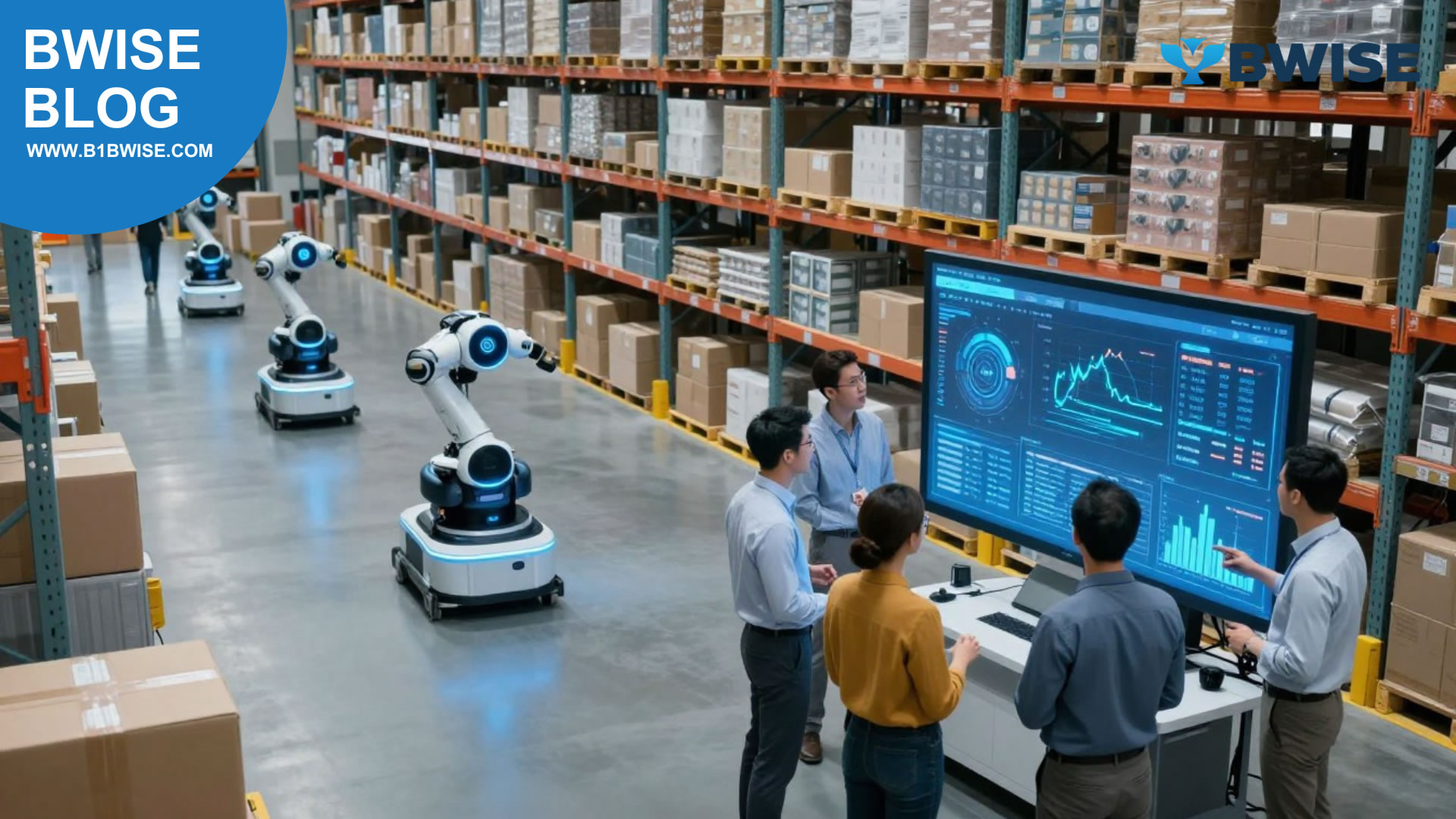
By using an AI-powered WMS, your facility can transition from reactive tracking to proactive management. This shift allows your team to streamline workflows and improve overall business performance through smarter, data-driven choices.
In this article, we will explore how this advanced warehouse management system AI connects inventory control with labor coordination and automation. We will show you how these tools help you stay competitive in a demanding market.
Key Takeaways
- Advanced systems now actively recommend operational actions rather than just tracking data.
- Integrating smart technology helps warehouse leaders reduce manual effort significantly.
- Real-time decision-making improves inventory flow and overall facility speed.
- Better labor coordination is a primary benefit of modern intelligent software.
- Adopting these tools allows businesses to scale operations more effectively.
Why Warehouse Management Is Moving From Rules to Decisions
The shift from static rule-based logic to dynamic intelligence is changing how warehouses operate. For years, managers relied on rigid software settings to dictate every movement on the floor. While these systems provided structure, they often lacked the flexibility to handle the unpredictable nature of modern logistics.
When demand spikes or labor availability drops, fixed rules can become a bottleneck rather than a solution. Traditional systems struggle to adapt to these sudden shifts, leading to inefficiencies that hurt the bottom line. This is where AI in warehouse management offers a superior path forward by interpreting real-time operational context.
Instead of following a pre-programmed path, modern software evaluates multiple variables simultaneously. This advanced WMS decision-making allows the system to prioritize urgent orders while balancing inventory levels and staff capacity. By analyzing data patterns, the system can suggest the most efficient route or task sequence for any given moment.
It is important to note that this does not mean every process must become fully autonomous. Human oversight remains a vital component of a healthy warehouse ecosystem. Instead, the goal is to provide teams with smarter recommendations that improve overall decision quality and speed.
Consistency is another major advantage of integrating AI in warehouse management. By removing the guesswork from daily operations, businesses can ensure that every shift performs at a high level. This reliability helps managers maintain steady throughput even during peak seasons or unexpected supply chain disruptions.
Ultimately, the move toward intelligent WMS decision-making is about empowering your workforce. When the system handles complex calculations, your team can focus on high-value tasks that require human judgment. This balance creates a more responsive, resilient, and efficient warehouse environment for the future.
How an AI-powered WMS Makes Smarter Operational Choices
An intelligent WMS transforms how your facility handles complex daily operations. By moving beyond basic automation, these systems act as a central brain for your entire supply chain. They process vast amounts of data to ensure your warehouse runs at peak performance.
Why context matters more than isolated rules
Traditional systems often rely on rigid, isolated rules that look at only one variable at a time. This approach fails when real-world conditions change rapidly. An artificial intelligence WMS looks at the bigger picture by combining order data, inventory status, and labor constraints simultaneously.
When a new order arrives, the system evaluates equipment availability and timing requirements in real time. It does not just follow a static path; it chooses the most efficient route based on current warehouse conditions. This context-aware decision-making ensures that your team avoids bottlenecks before they even start.
How machine learning improves decisions over time
The true power of an artificial intelligence WMS lies in its ability to learn from the past. Through machine learning warehouse optimization, the software identifies patterns in historical activity that humans might miss. It tracks which processes lead to success and which ones cause delays.
As new outcomes become available, the system refines its logic to provide even better recommendations. This continuous improvement cycle leads to faster inventory movement and significantly less manual effort for your staff. By leveraging machine learning warehouse optimization, your business gains a competitive edge that grows stronger every single day.

Where AI in Warehouse Management Creates the Biggest Impact
Implementing smart warehouse software transforms how facilities manage complex logistics. By moving beyond static rules, these systems analyze real-time data to optimize critical workflows like replenishment, slotting, and labor allocation. This shift allows managers to focus on strategy rather than manual adjustments.
Wave planning and exception handling represent two areas where AI delivers immediate value. Instead of rigid schedules, the software dynamically adjusts picking waves based on current order volume and carrier deadlines. This ensures that your team always works on the most urgent tasks first, maximizing throughput during peak hours.
An automated inventory control system acts as the backbone for maintaining stock integrity. It constantly monitors levels to identify discrepancies before they become fulfillment issues. By prioritizing cycle counts based on risk and velocity, the system helps teams address potential shortages or overstocks before they disrupt operations.
The true strength of smart warehouse technology lies in its ability to connect operational data across the entire facility. From the moment goods arrive at receiving to the final scan at shipping, the system tracks every movement. This visibility creates a unified view of storage, picking, and packing processes.
These improvements are not just theoretical; they provide measurable gains in efficiency. By automating routine decisions, businesses reduce human error and speed up order processing times. Adopting this approach ensures that your warehouse remains agile in an increasingly demanding market.
What Changes for People, Robots, and Daily Warehouse Operations
Adopting a robotics-driven WMS shifts the focus of your workforce from manual labor to strategic oversight. Instead of spending hours on repetitive data entry, employees transition into roles centered on supervision, problem-solving, and process improvement. This evolution turns the warehouse into a dynamic environment where technology handles the heavy lifting while people manage the flow.
Rather than viewing robots and conveyors as isolated tools, businesses now treat intelligent warehouse automation as a connected operating model. This system coordinates automated equipment in real-time, ensuring that every movement aligns with broader business goals. By integrating these technologies, the software creates a unified workflow that optimizes efficiency across the entire facility.
While technology excels at speed and precision, human judgment remains essential for handling unique exceptions. A robotics-driven WMS is designed to reduce manual effort, but it does not remove the need for human responsibility. People are still required to make complex decisions that machines cannot reliably handle, such as resolving unexpected supply chain disruptions or managing sensitive inventory issues.
Human oversight ensures that the system operates within ethical and safety boundaries. By keeping people in the loop, companies can maintain high standards of quality control that software alone might miss. This partnership between human intuition and machine efficiency is the cornerstone of a successful modern facility.
How an intelligent WMS explains or escalates its recommendations
Modern warehouse automation platforms are built to be transparent and communicative. When the system encounters a scenario that falls outside its programmed parameters, it does not simply stall or guess. Instead, it provides clear data-driven insights to the operator, explaining the logic behind its suggested course of action.
If a situation requires a higher level of authority, the software automatically escalates the task to a human supervisor. This intelligent warehouse automation approach ensures that complex problems are addressed by the right person at the right time. By providing actionable information, the system empowers your team to make faster, more informed decisions every single day.
The Business Benefits of AI-Powered Warehouse Operations
Transitioning to smarter systems allows companies to unlock hidden value within their daily logistics. By adopting AI-powered warehouse operations, businesses can move inventory faster while significantly reducing avoidable delays. This shift transforms how teams handle stock, ensuring that products reach customers exactly when promised.
When you rely on intelligent software, you gain the ability to turn real-time information into immediate, high-impact decisions. These systems analyze complex data patterns to optimize throughput and accuracy. As a result, your team spends less time on manual effort and more time focusing on high-value tasks that drive growth.
The integration of AI-driven warehouse operations creates a ripple effect of productivity across your entire facility. Employees benefit from clearer workflows, which leads to more consistent service levels and higher job satisfaction. When labor is supported by smart technology, the entire operation becomes more resilient to market fluctuations.
These improvements extend far beyond the four walls of your facility. By utilizing digital supply chain solutions, you gain total visibility into your inventory journey. This connectivity ensures that every decision made on the warehouse floor aligns with your broader business goals, ultimately lowering costs and improving the overall customer experience.
Agentic AI and the Future of Autonomous Warehouse Management
The next evolution in logistics involves systems that act rather than just suggest. An autonomous warehouse functions as an environment where software evaluates real-time conditions, coordinates complex actions, and responds to exceptions without constant human intervention.
Unlike traditional tools, agentic AI in logistics moves beyond simple recommendations. It plans multi-step tasks, such as re-routing inventory or adjusting labor shifts, to meet specific goals. This shift toward agentic AI in warehouse management allows systems to handle routine operations while identifying when a situation requires human oversight.
Setting boundaries for cost, safety, and service-level decisions
True autonomy requires clear guardrails to ensure the system operates within your business standards. You must define strict limits regarding operating costs, safety protocols, and service commitments. By setting these boundaries, you ensure the software prioritizes worker well-being and budget constraints above all else.
These limits also extend to data access and equipment control. The system should only interact with hardware and information streams that you explicitly authorize. This managed autonomy approach keeps the facility running efficiently while preventing the software from making unauthorized changes to critical infrastructure.
Keeping managers in control of high-impact actions
While the system handles daily tasks, human expertise remains vital for unusual operating conditions. The software is designed to request approval whenever the consequences of a decision are significant. This ensures that managers retain authority over high-impact actions that could affect long-term strategy or facility safety.
By maintaining this balance, your team can focus on high-level strategy rather than repetitive manual adjustments. The future of the autonomous warehouse is not about replacing people, but about empowering them with a partner that handles the heavy lifting of decision-making. This collaborative model creates a more resilient and responsive supply chain.

What to Evaluate Before Adopting an AI Warehouse Management System
Adopting autonomous decision-making in warehouses is a major step that demands thorough preparation. Before you commit to a full-scale rollout, you must evaluate your current data quality and integration requirements. A successful transition relies on clean, reliable data that the system can use to make accurate predictions.
You should also prioritize explainability and cybersecurity. It is vital to understand how the software reaches its conclusions to ensure transparency in your daily operations. Furthermore, your team must be ready for this shift, so assess workforce readiness and establish clear escalation controls to handle any unexpected system behavior.
The best way to start is with a limited pilot program. Focus on specific, defined workflows where you can easily measure risks and set clear approval thresholds. This approach allows you to test the AI warehouse management system in a controlled environment before expanding it across your entire facility.
Useful metrics for an AI-powered WMS pilot
To determine if your pilot is working, you need to compare baseline performance against new results. Start by tracking inventory accuracy and order cycle time to see if the system is truly speeding up your processes. These metrics provide a clear picture of how well the technology handles inventory movement.
You should also monitor pick productivity and exception volume to gauge efficiency gains. By measuring labor hours and service-level attainment, you can quantify the reduction in manual effort. These data points will confirm if your investment is leading to smarter decisions and more streamlined operations.
Conclusion
The future of warehouse management relies on systems that interpret complex context to improve daily recommendations. Modern platforms now coordinate actions with precision to ensure your facility runs at peak performance.
Effective AI supply chain management creates value when strong data meets human oversight. You gain the most benefit when operational controls and measurable goals work in harmony. This approach leads to smarter decisions and streamlined warehouse operations across your entire network.
You will notice faster inventory movement and significantly less manual effort as these tools mature. Your team can focus on high-level strategy while the software handles routine logistics tasks. This shift empowers your staff to manage exceptions rather than tracking every single pallet.
Start your journey by launching a focused pilot program rather than attempting an all-or-nothing transformation. Testing these capabilities in a controlled environment provides the insights needed for long-term success. Embracing this technology today positions your business to lead in a competitive global market.