
Managing company data requires a smart strategy. You need a system that fits your goals and helps your team succeed. Picking the right base is vital for your growth over the next few years. It provides a solid start for all your business tasks.
While many firms use web tools today, some leaders prefer their own servers. Having complete mastery of your database provides security for sensitive fields. This keeps your records safe inside your own building. It ensures you have access to your data at all times.
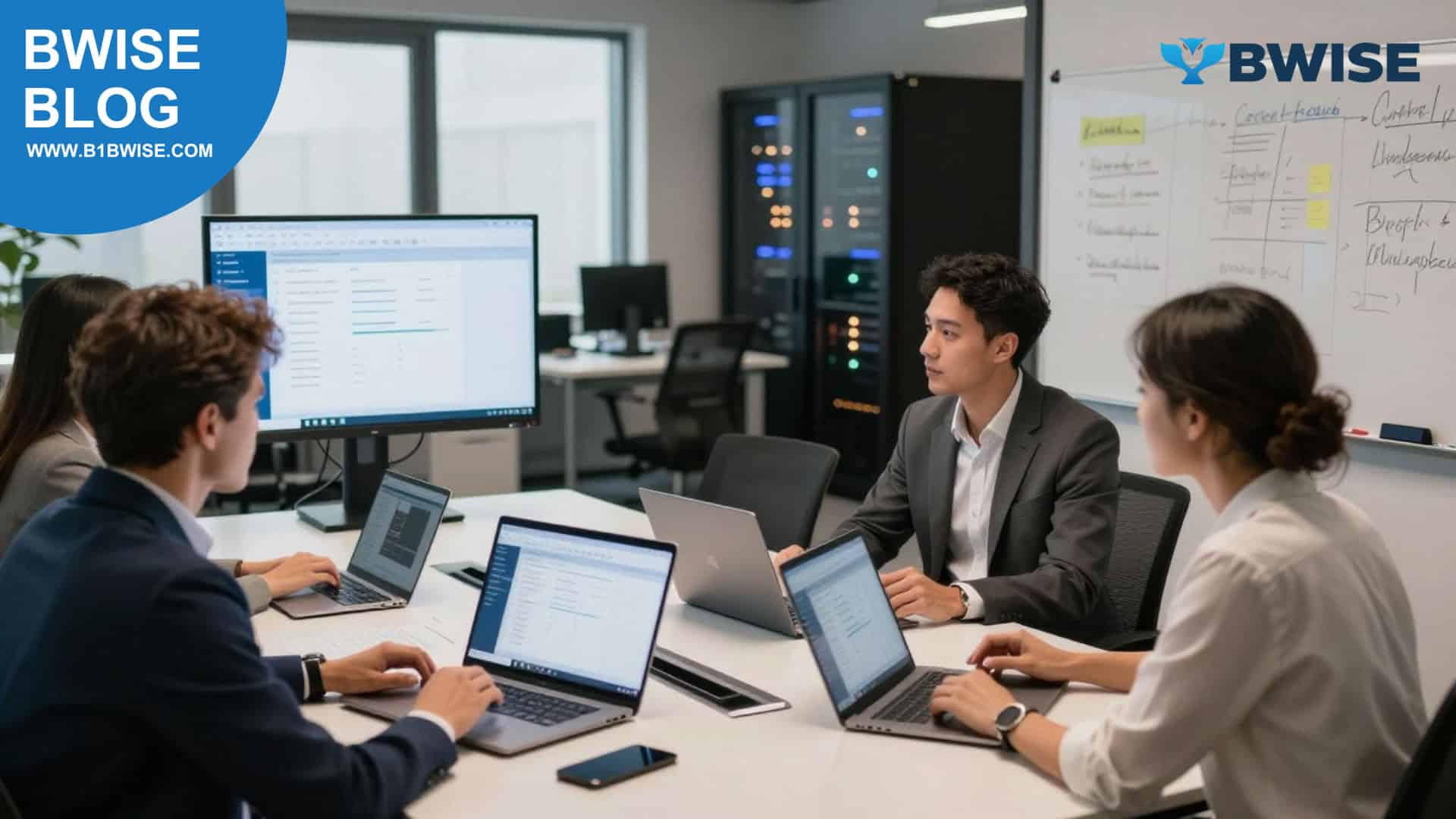
Buying an on premise ERP software is a significant choice for a firm. It involves looking at your budget and your tech skills to manage local systems. This guide shows you when staying local is the best move. It also looks at how to maintain your systems well.
Adjusting your platform allows you to tailor features to your specific methods. This flexibility is a major benefit for niche markets with complex rules. We will help you see if this path works for your business. Making the right call now helps your team stay ahead of the game.
Key Takeaways
- Direct control over all server hardware and internal data.
- High security for sensitive and private business files.
- Ability to change features for unique industry needs.
- Work stays steady without a fast internet link.
- Fixed setup costs without paying monthly user fees.
- Full power over when to run system updates.
Understanding On-Premise ERP Systems
In the realm of enterprise resource planning, on-premise ERP systems offer a distinct set of advantages and challenges. To make an informed decision about whether an on-premise ERP is right for your business, it’s crucial to understand what these systems entail.
What Is an On-Premise ERP Solution?
An on-premise ERP solution is a type of enterprise resource planning software that is installed and operated from a company’s own premises. This means that the organization is responsible for the maintenance, support, and upkeep of the system, including hardware and software.
Key characteristics of on-premise ERP solutions include
- Ownership and control of the ERP system and data
- Customization to meet specific business needs
- Integration with existing on-premise systems
Core Components of On-Premise ERP Software
On-premise ERP software typically consists of several core components that work together to provide a comprehensive view of an organization’s operations. These components may include:
- Financial management
- Human capital management
- Supply chain management
- Customer relationship management
How On-Premise ERP Differs from Cloud-Based Solutions
One of the primary differences between on-premise ERP and cloud-based ERP solutions is the deployment model. On-premise ERP is installed locally, whereas cloud-based ERP is hosted in the cloud and accessed via the internet.
The main differences between on-premise and cloud-based ERP include:
|
Feature |
On-Premise ERP |
Cloud-Based ERP |
|
Deployment |
Installed locally |
Hosted in the cloud |
|
Maintenance |
Handled by the organization |
Handled by the vendor |
|
Scalability |
Can be limited by hardware |
Highly scalable |
Key Scenarios When Businesses Should Choose On-Premise ERP
On-premise ERP systems are particularly suited for businesses with unique operational needs and stringent security requirements. These systems offer a range of benefits that cater to specific business scenarios where control, security, and customization are paramount.
Strict Data Security and Regulatory Compliance Requirements
Industries that handle sensitive data are subject to strict regulatory compliance requirements. On-premise ERP solutions provide the necessary security features to ensure that businesses can comply with these regulations.
Healthcare and HIPAA Compliance
The healthcare industry is governed by regulations such as HIPAA, which mandate the secure handling of patient data. On-premise ERP systems offer enhanced security features that help healthcare organizations maintain compliance with these regulations.
Financial Services and Banking Regulations
Financial institutions are subject to stringent regulations that require robust data security measures. On-premise ERP solutions enable these organizations to maintain control over their data and ensure compliance with financial regulations.
Need for Complete Control Over IT Infrastructure
Some businesses require complete control over their IT infrastructure to manage their operations effectively. On-premise ERP systems provide this level of control, allowing companies to customize their infrastructure according to their specific needs. The advantages of on-premise ERP in this context include enhanced security and better management of IT resources.
Limited or Unreliable Internet Connectivity
Businesses operating in areas with limited or unreliable internet connectivity can benefit from on-premise ERP systems. These solutions do not rely on continuous internet connectivity to function, ensuring that operations can continue uninterrupted.
Highly Customized or Complex Business Processes
Companies with highly customized or complex business processes can leverage on-premise ERP solutions to tailor their systems to meet specific needs. The flexibility of on-premise ERP allows for extensive customization, making it an ideal choice for businesses with unique operational requirements. When selecting an on-premise ERP, companies can explore top on-premise ERP solutions that offer the necessary customization capabilities.
Implementing an on-premise ERP system requires careful planning and execution. Businesses should consider their specific needs and the on premise erp implementation process to ensure a successful rollout.

Advantages of On-Premise ERP for Your Business
On-premise ERP software provides businesses with a range of benefits, from enhanced security to better customization. By hosting the ERP system on their own servers, companies can leverage several key advantages that contribute to improved operational efficiency and strategic decision-making.
Enhanced Data Security and Privacy Control
One of the primary benefits of on-premise ERP is the enhanced control over data security and privacy. With an on-premise solution, businesses have complete authority over their data, allowing for stricter access controls and more robust security measures. This is particularly important for companies handling sensitive information or operating in highly regulated industries.
Data encryption, access controls, and regular security audits are more effectively managed on-premise, reducing the risk of data breaches and cyber-attacks.
Greater Customization and Integration Capabilities
On-premise ERP systems offer greater flexibility for customization to meet specific business needs. Companies can modify the software to fit their unique processes and integrate it with other on-premise systems seamlessly. This level of customization is often more challenging with cloud-based solutions due to their multi-tenancy architecture.
Moreover, on-premise ERP allows for deeper integration with existing legacy systems, ensuring that businesses can maintain their current infrastructure while still benefiting from the ERP’s advanced features.
Long-Term Cost Predictability and Ownership Benefits
While the initial investment in an on-premise ERP system can be significant, it offers long-term cost predictability. Once the system is implemented, the costs are largely contained, with the main ongoing expenses being maintenance and support. This can be more cost-effective than subscription-based cloud ERP models, especially for larger organizations.
Additionally, owning the ERP system outright provides businesses with more control over their software and data, avoiding vendor lock-in and ensuring that they are not dependent on the vendor for critical operations.
Superior Performance for Data-Intensive Operations
On-premise ERP systems can offer superior performance for data-intensive operations. By hosting the ERP on their own hardware, businesses can optimize their infrastructure for the specific demands of their operations, ensuring high-speed data processing and minimal latency.
This is particularly beneficial for companies with complex manufacturing processes or those that require rapid data analysis and reporting. With on-premise ERP, businesses can achieve the performance levels they need to support their critical operations.
On-Premise ERP vs Cloud-Based Solutions: Making the Right Choice
Choosing between on-premise ERP and cloud-based solutions is a critical decision that can significantly impact your business operations. Both options have their strengths and weaknesses, and the right choice depends on various factors including cost, performance, and scalability.
Total Cost of Ownership Analysis
Understanding the total cost of ownership (TCO) is crucial when comparing on-premise ERP and cloud-based solutions. TCO includes not just the initial investment but also ongoing expenses.
Upfront Capital Investment vs Subscription Costs
On-premise ERP systems typically require a significant upfront capital investment in hardware and software. In contrast, cloud-based solutions usually involve subscription-based costs that can be more manageable for businesses with limited initial capital.
A detailed comparison of these costs is essential to determine which option is more financially viable for your business.
Ongoing Maintenance and Support Expenses
On-premise ERP systems also incur ongoing maintenance and support expenses, including hardware maintenance, software updates, and technical support. Cloud-based solutions, on the other hand, often include these services as part of their subscription packages.
Performance, Speed, and Reliability Factors
The performance, speed, and reliability of ERP systems are critical for business operations. On-premise ERP systems can offer superior performance for data-intensive operations due to the control over infrastructure.
However, cloud-based solutions have made significant strides in improving their performance and reliability, often leveraging advanced technologies and infrastructure.
Scalability and Flexibility Considerations
Scalability and flexibility are key considerations when choosing an ERP solution. On-premise ERP systems can be more challenging to scale due to the need for additional hardware and infrastructure investments.
Cloud-based solutions, by contrast, offer greater flexibility and scalability, allowing businesses to easily adjust their resources according to their needs.
On-Premise ERP System Requirements and Implementation
To successfully deploy an on-premise ERP system, businesses must consider several critical factors. The implementation process involves a thorough assessment of the organization’s current infrastructure, technical capabilities, and future needs.
Hardware and Infrastructure Requirements
One of the first steps in implementing an on-premise ERP system is to ensure that the hardware and infrastructure can support the solution. This includes assessing server capacity, storage needs, and network infrastructure. Businesses must also consider the scalability of their infrastructure to accommodate future growth.
A robust infrastructure is crucial for the smooth operation of an on-premise ERP system. This includes reliable power supply, adequate cooling systems, and secure data storage facilities.
IT Staff and Technical Expertise Needs
Implementing and maintaining an on-premise ERP system requires a team with the right technical expertise. This includes professionals skilled in ERP configuration, database management, and IT infrastructure management.
Adequate training for IT staff is essential to ensure they can effectively manage and troubleshoot the ERP system. This may involve hiring new personnel or providing training for existing staff members.
Implementation Timeline and Project Planning
A well-planned implementation timeline is critical to the success of an on-premise ERP project. This involves setting realistic milestones, allocating necessary resources, and establishing a project management team.
Effective project planning helps minimize disruptions to business operations and ensures that the ERP system is implemented within the scheduled timeframe and budget.
Selecting Top On-Premise ERP Vendors
Choosing the right ERP vendor is a crucial decision that can significantly impact the success of the implementation. Businesses should evaluate vendors based on their experience, product offerings, and support services.
Some of the top on-premise ERP vendors include SAP, Oracle, and Microsoft. These vendors offer comprehensive ERP solutions that cater to various business needs and industries.

Evaluating Whether On-Premise ERP Is Right for Your Business
Determining the suitability of an on-premise ERP system for your business requires careful consideration of several key factors. This evaluation is crucial in making an informed decision that aligns with your business needs and objectives.
On-premise ERP systems offer unique advantages, but they may not be the best fit for every organization. To make the right choice, businesses must assess their specific situation across various dimensions.
Assessing Your Business Size and Industry Sector
The size and industry of your business play a significant role in determining the appropriateness of an on-premise ERP solution. Larger enterprises with complex operations often benefit from the control and customization that on-premise ERP provides.
For instance, industries with strict regulatory requirements, such as finance or healthcare, may prefer on-premise ERP for its enhanced security and compliance features.
Analyzing Your Current IT Capabilities and Resources
Your organization’s IT capabilities and resources are critical factors in the decision-making process. On-premise ERP requires significant upfront investment in hardware and infrastructure, as well as ongoing maintenance and support.
Businesses should assess whether they have the necessary IT staff and technical expertise to implement and manage an on-premise ERP system effectively.
Determining Your Data Control and Compliance Needs
Data control and compliance are paramount for many businesses. On-premise ERP offers greater control over data security and privacy, which can be a decisive factor for organizations handling sensitive information.
It’s essential to evaluate your business’s specific compliance needs and determine whether an on-premise ERP can better meet those requirements.
Considering Future Growth and Business Objectives
Finally, businesses should consider their future growth plans and overall business objectives when evaluating on-premise ERP. While on-premise solutions offer long-term cost predictability and ownership benefits, they may require more significant upfront costs and can be less flexible in terms of scalability.
Assessing your business’s growth trajectory and strategic goals will help you decide if the benefits of on-premise ERP align with your future plans.
Conclusion
Choosing the right ERP system is a critical decision for businesses, and on-premise ERP software offers a viable solution for those requiring high levels of data security and customization. By understanding the core components and benefits of on-premise ERP systems, businesses can make informed decisions about their IT infrastructure.
On-premise ERP vendors provide a range of solutions that cater to specific business needs, from strict data security and regulatory compliance to complex business processes. Evaluating these needs and assessing IT capabilities are crucial steps in determining whether an on-premise ERP system is the right choice.
Ultimately, on-premise ERP software offers businesses a high degree of control over their operations, enhanced performance for data-intensive tasks, and long-term cost predictability. By carefully considering these factors, businesses can harness the full potential of on-premise ERP solutions to drive growth and success.